
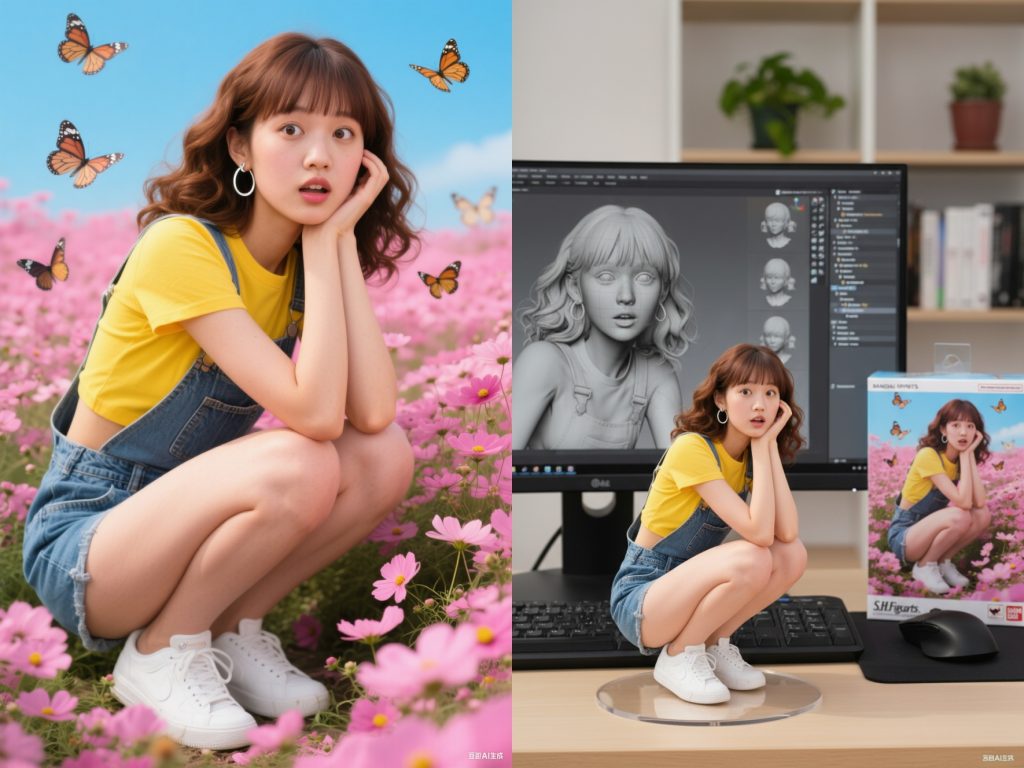
Nano Banana Modle is an AI-powered platform that generates unique 3D figurines from simple text prompts or photos. In just seconds, users can create high-quality, customizable models across styles such as anime, realistic, chibi, fantasy, or mecha. The tool is designed for artists, game developers, collectors, and 3D printing enthusiasts who want to turn creative ideas into tangible digital or physical figures quickly and easily.
Nano Banana – AI Doll Generator is a creative AI tool that instantly transforms your ideas into personalized 3D dolls. Whether you want anime-inspired figures, realistic styles, or playful chibi characters, Nano Banana delivers high-quality results in seconds. Perfect for collectors, designers, and anyone who loves unique digital creations.
Key Points :
First, What Exactly is Nano Banana and Who Is It For?
Most AI art tools like Midjourney or Stable Diffusion are generalists. You can ask for a photo of an astronaut, a painting of a landscape, or a 3D model of a car. They do everything pretty well.
Nano Banana is a specialist. It was trained almost exclusively on images of dolls, anime figures, and cute character art.
It’s Not a General-Purpose AI Art Tool—It’s a Specialist
This is the most important thing to understand. Asking it to make a photorealistic portrait is like asking a world-class pastry chef to grill you a steak. They might be able to do it, but you’re missing the point. You go to them for the cake. You come to Nano Banana for the dolls.
The Core Idea: The “Nano Banana” Model vs. Generic Models
Think of it this way: a generic AI model knows a little bit about everything. The Nano Banana model knows everything about one thing: cute dolls. This means you don’t have to fight the AI to get it to understand the aesthetic you want. It’s the default.
My Goal: Creating “Project Peppermint” From Scratch
To really put this to the test, I set a simple goal: create a consistent character I named “Project Peppermint.” My idea was a doll with peppermint-striped hair, green eyes, and a cheerful vibe.
Related Posts
The Initial (Awful) Results and What I Learned
My first attempts were a disaster. I used a simple prompt: a cute doll with peppermint hair.
The results were… something else. Messy backgrounds, distorted faces, and the classic AI spaghetti fingers.
This taught me my first lesson: you can’t be lazy with your prompts. Nano Banana needs specific instructions.
The Nano Banana Prompting Formula That Actually Works
After hours of trial and error, I landed on a four-part formula that turned my results from junk to gold.
Step 1: Subject & Core Attributes (The “Who”)
This is your base. Be descriptive and use clear, simple terms.
- Bad: a girl
- Good: 1girl, solo, cute face, green eyes, long wavy peppermint striped hair
Notice how I use tags like 1girl and solo. The model responds well to this kind of specific, tag-based language.
Step 2: The “Magic” Style Keywords (The “Look & Feel”)
This is where Nano Banana shines. You can tell it exactly what kind of doll you want. Adding one of these keywords completely changes the output.
- chibi: Big head, small body, super cute and simplified.
- porcelain doll: Smooth, shiny skin, more realistic (but still doll-like) features.
- ball-jointed doll (BJD): Visible joints at the elbows, knees, and wrists for that classic BJD look.
- Nendoroid style: Mimics the popular Japanese vinyl figures.
Step 3: Action & Setting (The “What & Where”)
Describe what your doll is doing and where they are. I found that simple backgrounds work best.
- sitting on a cushion
- holding a teacup
- standing in a garden, simple background, depth of field
Adding simple background and depth of field helps the AI focus on the character and not clutter the image.
Step 4: The Crucial Negative Prompts (What to Avoid)
This was the biggest breakthrough for me. A negative prompt is a list of things you want the AI to stay away from. Bad hands? Weird legs? Blurry images? Tell it to stop.
After a lot of testing, I developed a go-to list that I now use for almost every generation. Seriously, just copy and paste this into your negative prompt box.codeCodedownloadcontent_copyexpand_less
(worst quality, low quality:1.4), ugly, deformed, distorted, bad hands, mutated fingers, extra limbs, extra fingers, poorly drawn hands, malformed limbs, blurry, long neckLet’s Build “Project Peppermint”: A Step-by-Step Walkthrough
Okay, let’s put the formula into practice and see how I went from that initial mess to a finished character.
Prompt v1: The Basic Idea
- Prompt: a cute doll with peppermint hair
- Result: The garbage I showed you earlier. Moving on.
Prompt v2: Adding a Specific Style and Quality Tags
Now let’s add some style and tell the AI we want a high-quality image. I’ll aim for a BJD look.
- Prompt: masterpiece, best quality, 1girl, solo, cute face, green eyes, long wavy peppermint striped hair, (ball-jointed doll:1.2)
- Result: A huge improvement! The face is clearer, and it definitely looks more like a BJD. The masterpiece, best quality tags really work. The hands are still a bit weird, though.
Prompt v3: Refining the Details (Hair, Eyes, Clothing)
I want more control. I’m going to add details about her outfit and the background.
- Prompt: masterpiece, best quality, 1girl, solo, cute face, detailed green eyes, long wavy (red and white striped hair:1.3), ball-jointed doll, wearing a cute green dress, sitting in a chair, simple background, depth of field
- Result: So much better. The scene is coming together, the hair is perfect, and the background isn’t distracting. But ugh, look at that hand.
Prompt v4: Fixing the Hands with Negative Prompts
Time for the final touch. I’ll use my full prompt from v3 and add my magic negative prompt list.
- Prompt: (Same as v3)
- Negative Prompt: (worst quality, low quality:1.4), ugly, deformed, distorted, bad hands, mutated fingers, extra limbs, extra fingers, poorly drawn hands, malformed limbs, blurry, long neck
- Result: Success! We have a clean, high-quality image of “Project Peppermint” with normal-looking hands. 🙂
So, is the Nano Banana AI Doll Generator Worth It?
After spending a full day with it, I can confidently say yes, but only if you’re looking to create this specific doll/anime aesthetic.
If you want realistic photos or general AI art, stick with the big names. But if you want to create charming, high-quality, and unique doll characters without spending weeks learning to draw, Nano Banana is an incredible tool once you learn its quirks.
My final verdict is this: It’s a fantastic specialist tool that rewards a little bit of learning. Use my prompting formula, steal my negative prompt list, and you’ll skip the hours of frustration I went through.
Now I’m curious—what kind of dolls have you tried to create? Share your results or frustrations in the comments below
 Login with Google