
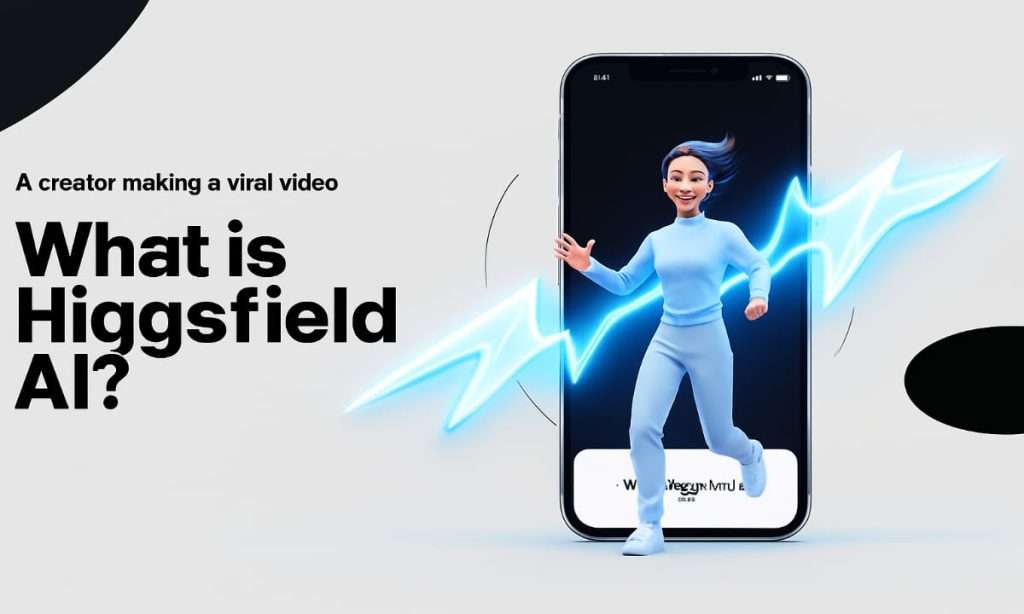
Hey there. So, you’ve probably heard the name “Higgsfield AI” popping up in conversations about the future of video and social media, and you’re wondering what all the fuss is about. Is it another complicated tool you have to spend weeks learning? Is it actually any good?
Let me cut straight to the chase. Higgsfield AI is a new video creation platform that uses artificial intelligence to help you generate and edit realistic, human-like videos from simple text prompts. Think of it as a creative partner that can turn your ideas—whether it’s for a TikTok dance, a product ad, or a short film—into a shareable video with a real human avatar in just a few minutes. It’s designed to be incredibly user-friendly, even if you have zero video editing experience.
In this article, I’m going to break it all down for you. We’ll go from “What is this thing?” to “How can I use it right now?” We’ll explore what makes it different from the other AI tools out there, dive into its coolest features, and figure out if it’s the right fit for your creative projects.
Ready? Let’s get into it.
First Off, What Makes Higgsfield AI Different?
Alright, so you’re probably thinking, “Another AI video tool? Yawn.” And honestly, I get it. The market is flooded with them. But Higgsfield is taking a slightly different path, and IMO, it’s a pretty smart one.

While many AI video generators focus on creating cinematic, movie-like scenes (which are cool, but often look a bit…well, fake), Higgsfield is doubling down on creating relatable, social-media-native content. Their secret sauce is an AI model they call “Diff-Human,” which is specifically trained to generate realistic human characters and movements.
What does that mean for you? It means the videos you create feel more authentic. Instead of a stiff, robotic-looking avatar, you get a character that moves, talks, and expresses emotion in a way that feels natural on platforms like TikTok, Instagram Reels, and YouTube Shorts. They’re not trying to replace Hollywood; they’re trying to give everyday creators, marketers, and social media managers a massive shortcut.

Who is Higgsfield AI Actually For?
This is a key question, because no tool is perfect for everyone. From what I’ve seen, Higgsfield is positioning itself for a few key groups:
- Social Media Managers: Imagine needing to pump out 5-10 video ideas for a client this week. Instead of coordinating a whole video shoot, you can just type out your concepts and get high-quality drafts back in minutes. It’s a huge time-saver.
- Small Business Owners & Marketers: Don’t have the budget for a full-time video team or expensive camera gear? Now you can create professional-looking product demos, testimonials, or brand announcements without breaking the bank.
- Content Creators & Influencers: This one is a bit of a double-edged sword. While some creators might worry about AI replacing them, others are seeing it as a powerful brainstorming tool. You can test out different video concepts, scripts, and formats with AI before you commit to filming them yourself.
- Anyone with a Creative Idea: Honestly, this is the most exciting part. If you’ve ever had a funny idea for a skit or a concept for a short video but didn’t have the means to make it, Higgsfield lowers that barrier to almost zero.
It’s not necessarily for the professional filmmaker who needs granular control over every single frame. It’s for the fast-moving, social-first creator who values speed and authenticity.

Let’s Talk Features: How Does This Thing Actually Work?
Okay, let’s get into the nitty-gritty. When you open up Higgsfield, you’re not bombarded with a million confusing buttons. The workflow is designed to be super intuitive. Here’s a breakdown of the core features and how you’d use them.
1. The “Idea-to-Video” Prompting
This is where the magic starts. You can literally just type in an idea. For example:
“A trendy girl in a coffee shop, talking about three study hacks for final exams. She’s energetic and uses hand gestures. The style should be like a popular TikTok tutorial.”
Higgsfield’s AI then gets to work. It analyzes your prompt to understand the:
- Character: A trendy girl.
- Setting: A coffee shop.
- Action: Talking and using hand gestures.
- Topic: Study hacks.
- Style: A TikTok tutorial.
From this, it generates a complete video. It creates the avatar, puts them in the right environment, and animates their movements and speech. It’s wild.
2. Character Customization and “Digital Replicas”
This is where it gets a little Black Mirror, but in a cool way. You’re not just stuck with a library of stock avatars. Higgsfield allows for a deep level of customization. You can tweak your character’s appearance, from their hairstyle to their clothes, to perfectly match your brand or vision.
Even more impressive is their plan for Digital Replicas. The idea is that you’ll be able to create an AI version of yourself. By uploading a short video of you talking, the AI can learn your voice, likeness, and mannerisms. Why is this a game-changer?
- For Brands: Your CEO could “record” a weekly message for the team without ever stepping in front of a camera.
- For Creators: You could have your digital twin star in your social media videos, freeing you up to focus on other things.
Of course, this raises all sorts of ethical questions, which the company says it is taking very seriously with robust safety protocols. But the potential is undeniably huge.
3. The “In-Painting” Video Editor
So, the AI generates a video, but what if you don’t like a specific part of it? Maybe the character’s shirt is the wrong color, or the background looks a bit plain. This is where Higgsfield’s in-painting editor comes in.
Video in-painting is a technique that lets you “paint over” a part of a video and tell the AI what to replace it with.
Let’s say you like the video of the girl in the coffee shop, but you want her to be holding a specific brand of coffee. You could simply circle the generic cup in her hand and type, “a blue coffee cup with a ‘Starbucks’ logo.” The AI will then regenerate only that part of the video, keeping everything else the same.
This is so much more efficient than traditional editing. You can change outfits, swap props, or even alter the scenery without having to reshoot or re-render the entire scene. It’s iterative creation at its finest.
But Does It Actually Look Real? A Brutally Honest Assessment
This is the million-dollar question, isn’t it? Does it pass the eye test?
My honest answer: It’s impressively close, especially for social media contexts.
The “Diff-Human” model does a fantastic job with small, subtle humanisms—the way an eye twitches, a slight head tilt, or a natural hand gesture. When viewed on a phone screen in a fast-scrolling feed, many of the videos it produces could easily pass for human-shot content.
However, if you’re watching on a big 4K monitor and looking for flaws, you might still find them. Occasionally, there’s a slight “uncanniness” to the mouth movements or a moment where the physics seem just a tiny bit off. It’s not perfect, but it’s improving at a terrifyingly fast pace.
Frankly, for its intended purpose—creating quick, engaging social media videos—it’s more than good enough. The small imperfections are often less jarring than the awkwardness of a non-professional human presenter who is nervous on camera. So, in a weird way, the AI can sometimes feel more natural. :/
The Big Picture: How Could Higgsfield Change the Creator Economy?
Stepping back for a second, let’s think about the ripple effects here. A tool like this isn’t just a fun novelty; it has the potential to fundamentally reshape how we think about content creation.
1. The Demise of the “Video Tax”
For years, video has had a high barrier to entry. You needed a good camera, microphone, lighting, editing software, and the skills to use them all. This “video tax” has kept many small businesses and aspiring creators on the sidelines. Higgsfield effectively burns that tax to the ground. Now, the primary currency is the quality of your ideas, not the size of your budget.
2. A Shift from Production to Curation
The role of a content creator might evolve. Instead of spending 80% of your time on the technical aspects of filming and editing, you could spend that time brainstorming, scripting, and refining ideas. Your job becomes more like that of a movie director or a creative director—guiding the AI to produce your vision. You’re the brain; the AI is the crew.
3. Hyper-Personalized Advertising
This is a big one for marketers. Imagine being able to generate a thousand different versions of a video ad, each one tailored to a specific demographic. You could have an avatar that looks like the target customer, speaking their language, and referencing their specific interests. According to industry reports, personalized content can dramatically increase engagement, and Higgsfield could put that capability into the hands of a one-person marketing team.

What Are the Downsides? (Because Nothing’s Perfect)
As exciting as this all is, we need to keep our feet on the ground. There are some real challenges and potential downsides to consider.
- The Authenticity Paradox: Can a video generated by AI ever be truly “authentic”? Audiences are smart, and they crave genuine connection. If the internet becomes flooded with slick but soulless AI content, it might lead to a backlash where people prize raw, unedited, human-made content even more.
- The Ethical Minefield: The ability to create digital replicas is powerful, but also risky. What’s to stop someone from creating a digital replica of a celebrity (or anyone, for that matter) and having them say things they never said? Higgsfield has built-in safeguards, but this will be a constant cat-and-mouse game.
- The Cost: While it’s cheaper than a full video production team, advanced AI tools aren’t always free. As of now, Higgsfield is still in a limited beta, but it will eventually be a subscription service. Businesses will need to weigh the cost against the value it provides.
So, Should You Jump on the Higgsfield Bandwagon?
After digging into Higgsfield AI, my takeaway is this: this isn’t just another gimmick. It’s a thoughtfully designed tool that solves a very real problem for a very large group of people. It democratizes video creation in a way we haven’t seen before.
If you are a social media manager, a marketer at a small-to-medium-sized business, or a creator who wants to scale your output, you should absolutely be paying attention to Higgsfield. Get on their waitlist. Play with it the moment you get access. The skills you develop in prompting and guiding AI tools like this are going to be incredibly valuable in the coming years.
If you’re a professional videographer or a creator who prides themselves on their unique, hands-on artistic style, this tool might not replace your main workflow. But I’d still encourage you to see it as a potential addition to your toolkit—a way to quickly sketch out ideas or create supplementary content.
In the end, AI is a tool, just like a camera or a laptop. It’s a powerful one, for sure, but its effectiveness comes down to the person using it. Higgsfield provides the engine, but you still need to be the driver.
What do you think? Is this the future of social media content, or just a passing trend? Either way, it’s going to be a fascinating ride. 🙂



 Login with Google