
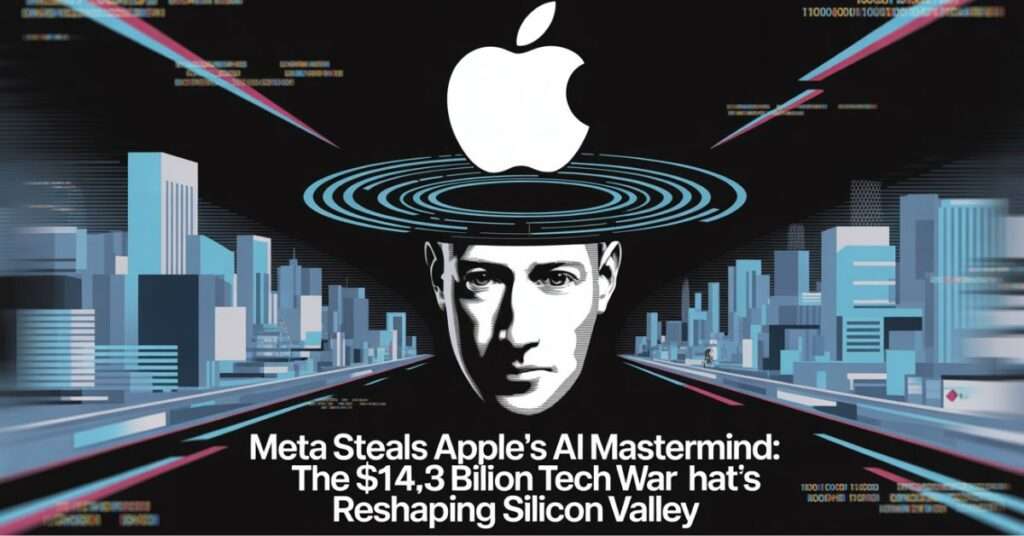
Silicon Valley just witnessed what insiders are calling the most audacious talent heist of 2025. In a move that sent shockwaves through the tech world, Meta has successfully lured away Ruoming Pang, Apple’s top artificial intelligence executive, in what sources describe as a “compensation package worth millions annually.”
But this isn’t just another corporate headhunting story. This is about the future of human civilization itself – and the companies desperately racing to control it.
The Man Who Built Apple’s AI Brain
Ruoming Pang wasn’t just any Apple employee. He was the architect behind Apple Intelligence, the very foundation that powers Siri’s responses and makes your iPhone seem almost… well, intelligent. For three years, Pang led Apple’s foundation models team, the secretive group responsible for training the AI systems that millions of users interact with daily.
“Losing Pang is like losing the chef who created your signature dish,” a former Apple engineer told me on condition of anonymity. “He didn’t just manage the team – he was the team.”
Pang’s departure comes at arguably the worst possible time for Apple. The company has been struggling to catch up in the AI race, with critics pointing out that Siri still can’t hold a candle to ChatGPT or Google’s Bard. Now, the person who knew Apple’s AI secrets better than anyone else is walking straight into the arms of their biggest competitor.
Zuckerberg’s $14.3 Billion Gamble
Mark Zuckerberg isn’t playing games anymore. The Meta CEO has reportedly grown “frustrated” – industry speak for absolutely furious – that companies like OpenAI are eating his lunch in the AI space. His response? Write the biggest check Silicon Valley has seen in years.
Meta’s new “Superintelligence Labs” isn’t just another research division. It’s Zuckerberg’s billion-dollar bet that he can leapfrog everyone else in the race to create artificial general intelligence – AI that matches or exceeds human intelligence across all domains.
The centerpiece of this strategy was a jaw-dropping $14.3 billion investment in Scale AI, a data labeling company run by 28-year-old Alexandr Wang. But here’s the twist: Meta didn’t just buy a stake in Scale AI – they bought Wang himself, installing him as their new Chief AI Officer.
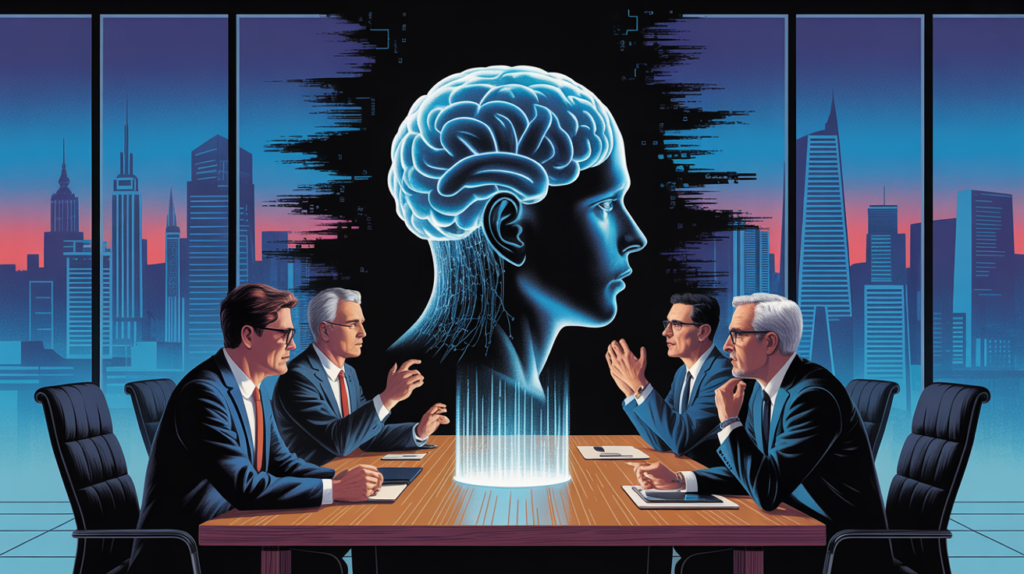
“This is like buying a Ferrari and getting the Formula 1 driver thrown in for free,” explained Dr. Sarah Chen, an AI researcher at Stanford who has worked with both companies. “Scale AI has been the invisible hand behind almost every major AI breakthrough, including ChatGPT. Meta just acquired the recipe book.”
The Boy Wonder Who Conquered Silicon Valley
Alexandr Wang’s story reads like a Silicon Valley fairy tale, if fairy tales involved billions of dollars and the fate of artificial intelligence. At just 28, Wang built Scale AI into the crucial infrastructure company that literally teaches AI systems how to see, understand, and interact with the world.
While other tech executives were coding in their garages, Wang was solving a more fundamental problem: how do you train an AI system to recognize a cat, understand human speech, or navigate a car through traffic? The answer: you need perfectly labeled data – millions upon millions of examples that teach machines what everything is.
“Wang didn’t just build a company; he built the foundation that the entire AI industry stands on,” says venture capitalist Maria Rodriguez, who has invested in several AI startups. “OpenAI, Google, Meta – they all depend on the kind of data infrastructure that Scale AI provides.”
But Wang’s real genius wasn’t technical – it was political. He cultivated relationships with the biggest names in tech, creating a network that eventually led to Meta’s massive investment and his own recruitment to their superintelligence team.
Apple’s AI Embarrassment
For Apple, this talent exodus represents more than just a personnel problem – it’s a public admission that their AI strategy is failing. The company that once revolutionized personal computing with the iPhone is now watching its competitors race ahead in the next technological revolution.
Craig Federighi, Apple’s head of software engineering, and Mike Rockwell, who helped create the Vision Pro headset, are now tasked with picking up the pieces of Apple’s AI ambitions. But losing Pang means losing institutional knowledge that can’t be easily replaced.
“It’s like losing the person who holds all the passwords,” jokes one former Apple insider. “Sure, you can reset them, but good luck remembering what everything was supposed to do.”
The timing couldn’t be worse for Apple. The company has been promising AI features for years, but iPhone users are still waiting for Siri to actually understand what they’re asking for. Meanwhile, Google’s AI can write poetry, OpenAI’s ChatGPT can code entire applications, and now Meta has the talent and resources to potentially surpass them all.
The Human Cost of the AI Arms Race
Behind the billion-dollar deals and corporate chess moves are real people whose lives are being turned upside down by this talent war. Engineers who once worked for the same companies are now on opposite sides of an increasingly bitter competition.
“It’s like watching your family break up,” says Jennifer Kim, a former Google AI researcher who now works at a startup. “These people used to collaborate, share ideas, push each other to be better. Now they’re locked in different buildings, working on competing projects, probably signing NDAs that prevent them from even talking to their old colleagues.”
The financial incentives are staggering. Sources close to the negotiations say that top AI talent is commanding salaries that would make professional athletes jealous. Stock options, signing bonuses, and golden handcuffs are the norm, not the exception.
“We’re talking about compensation packages that can reach eight figures annually for the very top people,” reveals a Silicon Valley recruiter who specializes in AI talent. “These companies are betting their entire futures on artificial intelligence, so they’re willing to pay whatever it takes.”
Meta’s Llama 4 Disaster
Zuckerberg’s frustration with Meta’s AI progress isn’t just about being behind – it’s about being publicly embarrassed. The company’s latest AI model, Llama 4, launched in April 2025 to what can only be described as a disaster.
The model was rushed to market, plagued by performance issues, and widely criticized for inflated metrics that didn’t match real-world performance. Tech reviewers called it “a step backward” and “embarrassingly bad compared to the competition.”
“Llama 4 was supposed to be Meta’s ChatGPT moment,” explains tech analyst David Park. “Instead, it became their Google+ – a reminder that having unlimited resources doesn’t guarantee success in tech.”
The failure of Llama 4 reportedly sent Zuckerberg into a strategic spiral, leading to the massive investments in Scale AI and the creation of the superintelligence division. It’s a classic Silicon Valley move: when you’re losing, change the game entirely.
The Talent War Goes Global
This isn’t just an American phenomenon. Tech companies worldwide are scrambling to secure AI talent, leading to a global brain drain that’s reshaping the industry. Chinese companies are offering massive packages to lure Western researchers, while European startups are struggling to compete with Silicon Valley salaries.
“We’re seeing the greatest migration of intellectual capital in human history,” says Dr. Michael Thompson, who studies technology workforce trends at MIT. “The people who understand AI aren’t just employees anymore – they’re strategic assets that can determine which companies survive the next decade.”
The implications go beyond corporate competition. Countries are starting to treat AI talent like a national security issue, with some governments considering restrictions on researchers moving between certain companies or countries.
What This Means for the Future
The creation of Meta Superintelligence Labs represents more than just another corporate reorganization – it’s a declaration of war in the race to build artificial general intelligence. With Pang’s expertise in foundation models, Wang’s data infrastructure knowledge, and billions in funding, Meta is positioning itself as a serious challenger to OpenAI and Google.
But success in AI isn’t just about money and talent – it’s about execution. History is littered with well-funded projects that failed to deliver on their promises. Remember Google+? Facebook’s cryptocurrency project? Microsoft’s Windows Phone?
“Having the best team doesn’t guarantee victory,” warns former Google executive Rachel Martinez. “Apple had the best engineers in the world, but they still lost Pang to Meta. Success in AI will depend on culture, strategy, and a little bit of luck.”
The Stakes Have Never Been Higher
As I write this, the race to build artificial general intelligence is accelerating at a pace that would have seemed impossible just a few years ago. The company that wins this race won’t just dominate tech – they’ll shape the future of human civilization.
Will it be OpenAI, with their head start and ChatGPT’s massive user base? Google, with their deep research capabilities and unlimited data? Or will Meta’s billion-dollar talent acquisition spree pay off, allowing them to leapfrog the competition?
The answer may depend on whether Ruoming Pang can work his magic at Meta the way he did at Apple. But one thing is certain: the AI talent war is far from over, and the next few years will determine which companies – and which countries – control the most powerful technology ever created.


 Login with Google