
Busted. You caught me.
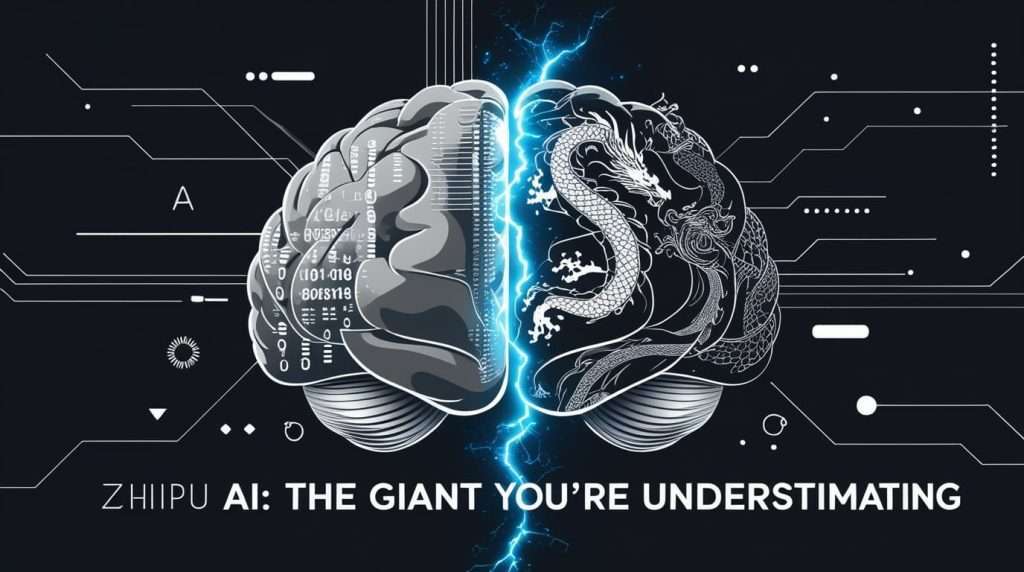
For weeks, I’ve had this nagging feeling that a new player in the AI space was flying under the radar, and it turns out I was right. Everyone’s talking about the usual suspects—OpenAI, Google, Anthropic—but there’s a quiet giant emerging from the East that’s starting to make some serious noise. I’m talking about Zhipu AI.
So, what is Zhipu AI? In short, Zhipu AI is one of China’s most prominent and well-funded AI startups, developing a powerful suite of large language models (LLMs) known as the GLM series. Think of them as a direct competitor to models like GPT-4, but with a unique architecture and a strong focus on bilingual (Chinese and English) capabilities. They’re not just another wannabe; they’re backed by heavyweights like Alibaba and Tencent and are deeply integrated with the Chinese tech ecosystem.
If you’ve heard whispers about them or seen their name pop up and wondered, “Should I be paying attention to this?”—the answer is a resounding yes. In this article, I’m going to pull back the curtain on Zhipu AI. We’ll break down what they do, what makes their tech special, and most importantly, why you absolutely need to have them on your radar.
Let’s get into it.
So, Who Are the Brains Behind Zhipu AI?
Before we dive into the nitty-gritty of their tech, let’s talk about origins. Because, let’s be honest, knowing where a company comes from tells you a lot about where it’s going.
Zhipu AI isn’t some fly-by-night startup that appeared out of thin air. It was actually spun out of the prestigious Tsinghua University in 2019. For those who don’t know, Tsinghua is basically the MIT of China. This academic backbone is a huge part of their identity and credibility. The company was founded by Tang Jie, a professor from the university’s computer science department, which gives them some serious research credentials.
This academic connection is, IMO, their secret weapon. While some AI labs are purely commercially driven, Zhipu AI has a deep-rooted foundation in rigorous academic research. This has allowed them to pioneer unique approaches to AI model architecture instead of just copying what others are doing.

Their big coming-out party, so to speak, was when they started raising some serious cash. We’re talking hundreds of millions of dollars from some of the biggest names in tech, including Alibaba, Tencent, Meituan, and Xiaomi. When the giants of an entire country’s tech scene all decide to back the same horse, you know something big is happening.
What Exactly is This “GLM” I Keep Hearing About?
Alright, let’s talk tech. The heart of Zhipu AI’s innovation lies in their family of models, collectively known as GLM (General Language Model).
You might be thinking, “Great, another three-letter acronym in the AI world. Just what I needed.” I get it. But this one is genuinely different.
Most of the big-name Western models, like the “T” in GPT (Transformer), are built on a specific type of architecture. Zhipu AI took a slightly different path. Their GLM models use a unique architecture that they believe offers better performance and scaling efficiency. Without getting too lost in the weeds, they’ve made some clever tweaks to how the model processes and understands language.
Their flagship series is the ChatGLM line. Think of this as their direct answer to OpenAI’s ChatGPT.

Here’s a quick breakdown of their main models:
- ChatGLM Series: This is their conversational AI, designed for dialogue, content creation, and complex reasoning. The latest iterations, like ChatGLM-4, are impressively powerful and, in some benchmarks, have shown to be competitive with GPT-4, especially in Chinese language tasks.
- CogVLM: This is their visual language model. It’s designed to understand and interpret images, allowing you to ask questions about a picture or have it describe what’s happening. It’s a key component for building multimodal AI applications.
- CodeGeeX: As the name suggests, this is their code generation model. It’s a powerful tool for developers, helping to write, debug, and translate code in various programming languages.
But what does this all actually mean for a user or a developer?
It means Zhipu AI isn’t just a one-trick pony. They’ve built a comprehensive ecosystem of models that can handle text, images, and code. This makes their platform, known as Zhipu AI Open Platform, incredibly versatile. It’s a playground for developers who want to build a whole range of AI-powered applications without being locked into a single provider.
How Does Zhipu AI’s Tech Actually Stack Up?
This is the million-dollar question, isn’t it? It’s one thing to have cool-sounding model names and a fancy university background. It’s another thing to perform in the real world.
From my own digging and testing, Zhipu’s models are the real deal.
One of their standout features is their truly bilingual capability. While many models claim to be multilingual, they often think in English and then translate. Zhipu AI’s GLM was designed from the ground up to be natively fluent in both Chinese and English. For any company or developer working with both markets, this is a massive advantage. It leads to more accurate, culturally nuanced, and less “robotic” translations and content generation.

In terms of raw performance, the benchmarks are impressive. Independent tests and academic papers have shown that models like ChatGLM-4 can go toe-to-toe with GPT-4 on a wide range of tasks, from logical reasoning puzzles to creative writing. In some Chinese-language benchmarks, it flat-out beats it.
But let’s be real for a second. Benchmarks aren’t everything. Where I see Zhipu AI really shining is in its practical application within the Chinese market. They’ve partnered with companies like Kingsoft Office (China’s Microsoft Office equivalent) to integrate their AI into productivity software. This is a level of deep, native integration that Western companies often struggle to achieve in China.
So, are they “better” than GPT-4 or Claude 3? The answer is… it depends.
- For Chinese language tasks? Almost certainly.
- For English language tasks? It’s highly competitive, but OpenAI still has the edge in certain areas, largely due to its massive head start in data and user feedback.
- For developers looking for an alternative? Absolutely. Competition is always good, and Zhipu AI offers a robust, well-documented, and often more cost-effective API.
What’s the Big “Content Gap”? What Are Others Missing?
Here’s something I’ve noticed in most articles about Zhipu AI. They either focus solely on the business and investment side (“Wow, they raised a lot of money!”) or they get way too technical, throwing around terms like “autoregressive blank infilling” that make your eyes glaze over.
What they miss is the “so what?” factor. What does Zhipu’s rise actually mean for the average person, developer, or business owner outside of China?
This is the real story, and it boils down to a few key things:
- The End of a Monoculture: For the past few years, the AI world has been dominated by a handful of US-based labs. The rise of a credible, powerful alternative from China signals a major shift. We’re moving from an AI monoculture to a multipolar world. This means more diversity in model architecture, training data, and even the “values” embedded in the AI.
- A New Playground for Developers: If you’re a developer, you now have another top-tier API to play with. Zhipu’s open platform is aggressively courting international users. This creates price competition (which is great for you) and gives you a backup option if another provider changes its policies or pricing. Never a bad thing to have options.
- A Glimpse into a Different AI Philosophy: Zhipu AI’s deep integration with hardware and government initiatives in China offers a different model for AI development. While the West has largely focused on a direct-to-consumer, cloud-based approach, China is building a more vertically integrated ecosystem. Watching Zhipu is like getting a sneak peek at a different evolutionary path for AI.
Most analyses just say “Zhipu AI is China’s OpenAI.” That’s lazy. It’s more nuanced than that. They are a product of a different environment—different data, different government priorities, and a different academic tradition. And that’s what makes them so fascinating.
Okay, I’m Convinced. How Do I Actually Use Zhipu AI?
Great question. Getting started is surprisingly straightforward.
For the casual user who just wants to see what the fuss is about, you can try their web-based chat interface. It’s a clean, simple way to interact with their latest ChatGLM model and get a feel for its personality and capabilities. Be prepared for it to feel a little different from ChatGPT—it’s a good thing!

For developers, the main entry point is the Zhipu AI Open Platform. This is their API service, similar to what you’d find from OpenAI or Anthropic. Here’s what you need to know:
- Documentation: Their documentation is available in both Chinese and English and is surprisingly comprehensive. They provide clear code examples for Python, Java, and other languages.
- API Keys: You can sign up for an API key on their platform. They often have a generous free tier to let you experiment before you commit.
- Model Selection: Through the API, you can access their full suite of models—ChatGLM for chat, CogVLM for image understanding, and CodeGeeX for code generation.
One of the things I appreciate is their focus on practical tools. They offer features like fine-tuning, allowing you to train their models on your own data to create a custom version for specific tasks. This is incredibly powerful for businesses that need an AI to understand their specific jargon or industry.
FYI, if you’re a developer who’s been working with OpenAI’s API, the transition is pretty smooth. The concepts are largely the same; you’re just calling a different endpoint and using a different SDK.
What’s the Final Takeaway?
Look, the AI landscape is moving at a breakneck pace, and it’s easy to get tunnel vision, focusing only on the headlines from Silicon Valley. But if you do that, you’re missing a massive piece of the puzzle.
Zhipu AI is more than just “China’s answer to OpenAI.” It’s a testament to the power of deep research, strategic partnerships, and a different approach to building foundational models. They are a legitimate, top-tier AI lab that is rapidly closing the gap with its Western counterparts and, in some areas, has already surpassed them.
So, the one thing you should remember from this article is this: start paying attention.
Whether you’re a developer looking for a powerful and cost-effective API, a business owner with an eye on the Asian market, or just an AI enthusiast who wants to understand the global picture, Zhipu AI deserves a spot on your radar. Go try their chatbot. Read their documentation. See what they’re building.
The future of AI won’t be built by one country or one company. It will be a global endeavor, and Zhipu AI has firmly established itself as one of the key players at the table. Ignoring them is no longer an option.
Now if you’ll excuse me, I have some more experimenting to do. 🙂



 Login with Google