
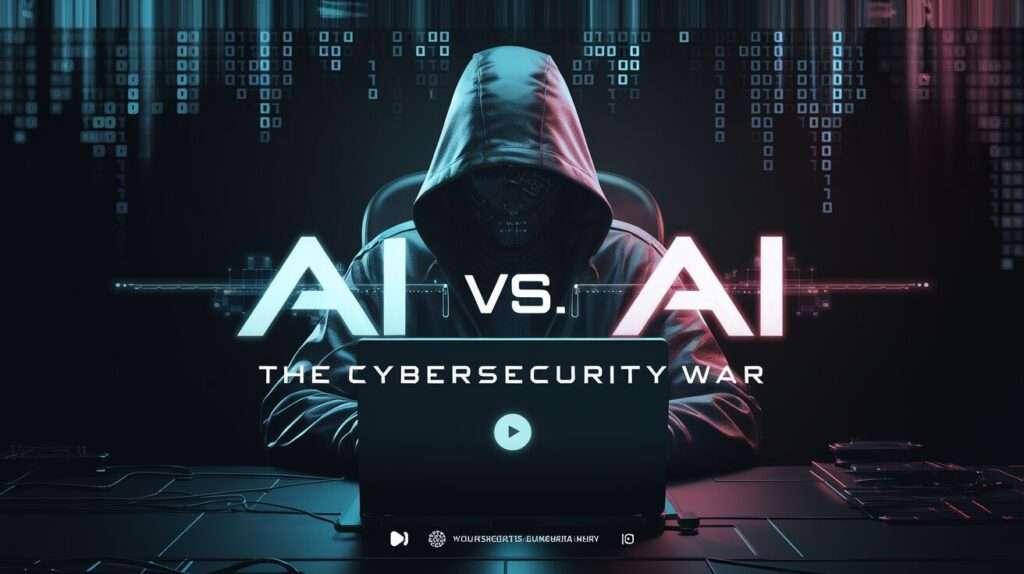
The New Era of Cybersecurity: AI as Both Defender and Attacker
Imagine a world where hackers don’t just write malicious code—they train AI models to do it for them. A world where a CEO’s voice on a phone call isn’t real, where phishing emails are indistinguishable from legitimate ones, and where cyberattacks evolve faster than security teams can patch them.
Welcome to 2025.
Artificial Intelligence has turned cybersecurity into a digital arms race—where defenders and attackers are locked in a never-ending battle, each armed with the same powerful weapon: AI.
The Double-Edged Sword of AI in Cybersecurity
The 2024 Security Priorities Study reveals a harsh reality: 72% of IT and security leaders say their roles have expanded drastically. Why? Because AI isn’t just a tool—it’s both a shield and a spear.
On one side, businesses are using AI to predict threats, automate defenses, and even self-heal from attacks. On the other, cybercriminals are weaponizing AI to craft undetectable scams, deepfake frauds, and hyper-targeted cyberattacks.
“It’s like playing chess against a supercomputer that learns from every move you make,” says Rohit Singh, Associate Director of Cybersecurity at Shaadi.com. “The only way to win is to outsmart it with AI of our own.”
The Rise of AI-Powered Cybercrime
1. Phishing Gets a Deadly Upgrade
Gone are the days of poorly written scam emails. AI now analyzes your LinkedIn, your emails, even your writing style—then crafts a message so convincing, even experts hesitate.
2. Deepfake Fraud: “Seeing Is No Longer Believing”
Fake videos of CEOs authorizing wire transfers? AI-generated voices mimicking your boss? It’s happening. “We’ve entered an era where you can’t trust what you see or hear,” warns Nantha Ram, Head of Cybersecurity at a Global Tech Firm.
3. AI Automates Cyberattacks
Hackers now use AI to scan networks for weaknesses 24/7, launching attacks at scale. “What used to take weeks now takes minutes,” says PM Ramdas, CTO of Reliance Group.

How Companies Are Fighting Back
Faced with AI-driven threats, cybersecurity teams are deploying AI vs. AI warfare:
- Self-Healing Security Systems – Networks that detect and repair themselves from breaches before humans even notice.
- AI-Powered Deepfake Detectors – Algorithms that analyze micro-expressions, voice patterns, and digital inconsistencies to spot fakes.
- Zero Trust for AI – “Assume every AI tool is a potential threat until proven otherwise,” says Nantha Ram.
But here’s the catch—AI isn’t perfect.
The Dark Side of AI Defense
- False Positives – AI sometimes misreads threats, locking out legitimate users.
- Bias in AI Models – If trained on flawed data, AI might ignore certain attack patterns.
- Over-Reliance on Automation – “You still need human intuition,” insists Ramdas.
The Bigger Problem: Employees & Rogue AI
Remember ChatGPT? Now imagine employees feeding company secrets into AI chatbots—accidentally leaking data.
“We’ve banned unauthorized AI tools,” says Harvinder Banga, CIO of CJ Darcl Logistics. “One slip-up could cripple our entire supply chain.”
India’s Finance Ministry recently banned AI tools like DeepSeek on official devices, fearing data leaks. Companies worldwide are following suit—locking down AI usage before it’s too late.
The Future: Can AI Outsmart Itself?
Experts predict three key trends for 2025:
- AI Ethics Committees – To prevent AI from becoming a “black box” of unchecked decisions.
- AI Security Audits – Regular checks to ensure AI isn’t being manipulated.
- Human-AI Teamwork – “The best defense? Humans and AI working together,” says Rohit Singh.
Final Verdict: Who’s Winning the AI Cyberwar?
Right now, it’s a stalemate.
Cybercriminals have AI. Defenders have AI. The difference? Who uses it better.
One thing’s certain—companies that ignore AI in cybersecurity won’t survive 2025.
“This isn’t just about technology,” warns PM Ramdas. “It’s about staying ahead in a game where the rules change every second.”



 Login with Google