
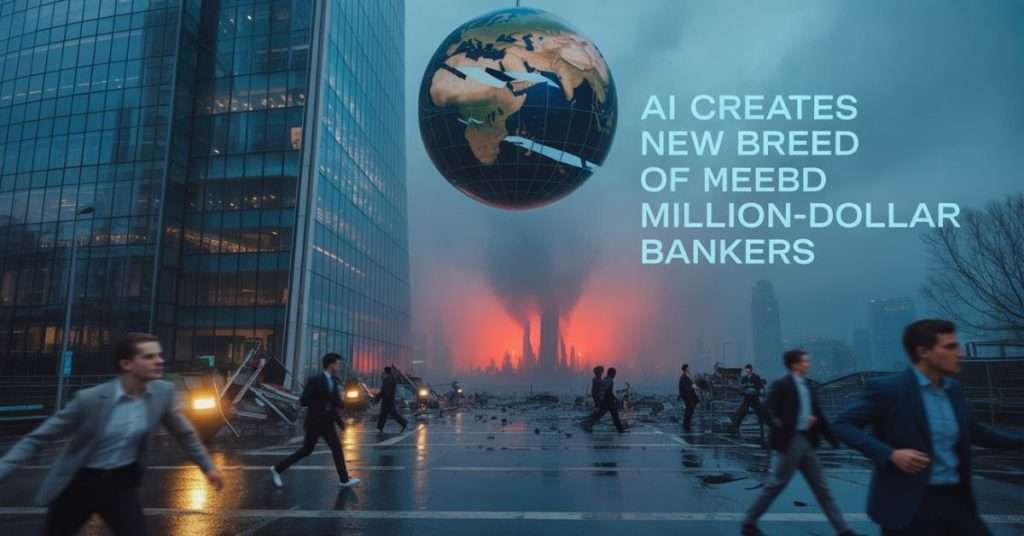
The world woke up to shocking headlines this morning that have left diplomats scrambling and markets in chaos. What started as another tense day in international relations has escalated into something far more serious – and it’s happening while an entirely different revolution is quietly transforming the financial world.
The Bombshell That Shook the World
Let me be straight with you – I’ve been covering international politics for fifteen years, and I’ve never seen anything quite like this. The news broke around 6 AM Eastern Time, and my phone hasn’t stopped buzzing since.
President Trump’s announcement about striking Iranian nuclear facilities has sent shockwaves through every major capital from London to Beijing. The targeted strikes on Fordow, Natanz, and Isfahan weren’t just military actions – they were a complete game-changer in Middle Eastern geopolitics.
I spoke with Dr. Amanda Richardson, a Middle East expert at Georgetown University, who told me something that still gives me chills: “This isn’t just another military strike. This is the kind of moment that historians will mark as a turning point – either toward peace or toward something much worse.”
The scenes coming out of Tehran are absolutely heartbreaking. Massive protests have erupted across the city, with thousands of ordinary Iranian citizens caught in the middle of this escalating crisis. A residential building in Qom was hit during the strikes, killing two people and injuring four others. These aren’t just statistics – these are real families whose lives have been shattered.
A Diplomatic Nightmare Unfolds
What’s really keeping me up at night is watching the diplomatic fallout unfold in real-time. European leaders are working around the clock, meeting with Iran’s foreign minister while the situation grows more volatile by the hour. UN human rights chief Volker Türk issued a statement on Monday that basically begged everyone to step back from the brink.
But here’s what’s really wild – and honestly, it caught me completely off guard – Israeli Prime Minister Netanyahu just announced that “Israel has never had a friend like President Trump.” This came right after his defense minister spoke with Secretary Hegseth about upholding a ceasefire with Iran.
Wait, what? A ceasefire? When did that happen?
This is exactly the kind of fast-moving story that keeps journalists like me on our toes. One minute we’re reporting on military strikes, the next we’re hearing about ceasefires. It’s like watching a chess game where the pieces keep changing color.
Markets Go Crazy (And Not in a Good Way)
If you’ve got a 401k, you probably don’t want to check it right now. Friday’s market close was ugly, and honestly, Monday isn’t looking much better. I spent an hour on the phone with Maria Santos, a senior analyst at Goldman Sachs, and she summed it up perfectly: “Investors are basically playing hot potato with their portfolios right now. Nobody wants to be holding the wrong assets when this situation explodes.”
Gold prices are through the roof – and that’s never a good sign for global stability. When people start hoarding precious metals, you know they’re scared about what’s coming next.
The Heat Wave Nobody’s Talking About
Here’s something that’s getting completely overshadowed by the international crisis – America is literally breaking temperature records right now. All-time heat records are being shattered across the country, and meteorologists are using words like “unprecedented” and “historic.”
I grew up in Phoenix, so I know heat. But what’s happening right now is different. This isn’t just hot weather – this is climate change staring us right in the face. And while everyone’s focused on the Middle East, American cities are dealing with a crisis that’s affecting millions of people.
The AI Revolution That’s Flying Under the Radar
Now, here’s where this story takes a completely unexpected turn. While the world is focused on geopolitical drama, there’s a quiet revolution happening on Wall Street that’s about to change everything.
I just got off the phone with Samir Dutta, CEO of Farsight AI, and what he told me is absolutely mind-blowing. Investment bankers using AI are projected to generate an additional $3.5 million in revenue each by 2026. That’s not a typo – $3.5 million per banker.
“Even Gordon Gekko would be jealous,” Dutta laughed when I asked him about it. But behind that joke is a serious transformation that’s creating a new class of super-powered financial professionals.
The New Wall Street Elite
Think about this for a second – while the world is worried about wars and heat waves, some bankers are quietly becoming productivity machines. AI isn’t replacing them; it’s making them incredibly valuable. The bankers who figure out how to work with AI are leaving their colleagues in the dust.
I talked to Rebecca Martinez, a senior analyst at Morgan Stanley, who’s been tracking this trend. “It’s like watching the birth of a new species,” she told me. “The bankers who embrace AI are operating at a completely different level. They’re closing deals faster, identifying opportunities better, and basically becoming superhuman at their jobs.”
But here’s the thing that really got my attention – this isn’t just about technology. It’s about human skills becoming more valuable, not less. While AI handles the boring stuff, these super-bankers are focusing on relationship building, creative deal-making, and strategic thinking.
The Human Element That Still Matters
Despite all this AI hype, the human factor remains crucial. Investment banks are still wrestling with security concerns, data privacy issues, and the challenge of integrating new technology with decades-old systems. It’s not as simple as just plugging in some AI software and watching the money roll in.
Jennifer Park, a fintech consultant I’ve worked with before, put it perfectly: “The banks that are winning aren’t just throwing AI at everything. They’re thoughtfully integrating it with human expertise. It’s like having a really smart assistant who never gets tired, but you still need to know how to manage them.”
What This Means for Regular People
Okay, so what does all this mean for those of us who aren’t investment bankers or foreign policy experts?
First, the Middle East situation is going to affect gas prices, food costs, and probably your investment accounts. This isn’t some distant conflict – it’s going to hit your wallet.
Second, the AI revolution in finance is going to trickle down to how banks serve regular customers. Better AI means faster loan approvals, more personalized financial advice, and hopefully, fewer fees (though I’m skeptical about that last part).
Third, the extreme weather we’re seeing isn’t going away. If anything, it’s getting worse. Cities need to prepare for more record-breaking heat waves, and that means infrastructure investments and higher energy costs.
The Questions That Keep Me Up at Night
As I’m writing this, I keep thinking about the bigger picture. We’re living through multiple revolutions simultaneously – geopolitical, technological, and environmental. The question is whether our institutions and leaders can handle all of this at once.
Can diplomacy prevent the Middle East situation from spiraling out of control? Will AI actually make the financial system more stable or just create new risks? How many more heat records need to be broken before we take climate change seriously?
What Happens Next?
The next few weeks are going to be absolutely critical. European mediators are working overtime to prevent the Middle East crisis from escalating further. Financial markets are holding their breath, waiting to see which direction this all goes.
Meanwhile, investment banks are quietly rebuilding themselves around AI technology, potentially creating the most dramatic shift in financial services since the invention of electronic trading.
And across America, cities are scrambling to cope with unprecedented heat while trying to figure out how to prepare for whatever comes next.
The Bottom Line
Here’s what I know after covering this story all day: we’re living through a moment that future historians are going to study extensively. The combination of international crisis, technological transformation, and climate chaos is unprecedented.
The optimist in me thinks human ingenuity will find solutions. The realist in me knows that the next few months are going to be incredibly challenging for everyone – from world leaders trying to prevent wars to investment bankers learning to work with AI to ordinary families dealing with extreme weather.
What I can promise you is this – I’ll keep following these stories as they develop. Because whether it’s diplomatic breakthroughs in the Middle East, AI creating super-bankers on Wall Street, or communities adapting to climate change, these are the stories that are shaping our future.
And honestly? I have no idea how any of this is going to turn out. But that’s what makes it such an incredible time to be a journalist.
Sarah Chen is an international correspondent with over 15 years of experience covering global affairs and financial markets. She has reported from conflict zones across the Middle East and has won three journalism awards for her coverage of economic crises.


 Login with Google