
I have a confession to make. My office is basically a graveyard for half-used notebooks. I have a weird obsession with buying fancy ones, convinced this will be the one that finally turns me into that super-organized person who remembers every single detail from every meeting. Spoiler alert: it never works.
So, when I first heard about the Plaud AI Note Taker, my inner skeptic rolled its eyes so hard I think I sprained something. An AI-powered device that promises to record, transcribe, and summarize all my meetings, calls, and voice memos? Seemed a little too good to be true. But I decided to give it a shot, and honestly, the results were pretty surprising.
This nifty gadget uses a specialized AI engine, powered in part by OpenAI’s GPT models, to not just record audio but to make sense of it. It automatically transcribes conversations with startling accuracy and then generates neat, structured summaries, complete with action items, mind maps, and key takeaways. Think of it as a personal assistant who never zones out or asks, “Wait, what did we just decide?”
So, in this deep dive, we’re going to break down exactly what Plaud AI is, how it works, who it’s for, and whether it’s genuinely worth your hard-earned cash. Let’s get into it.
So, What Exactly Is Plaud AI?
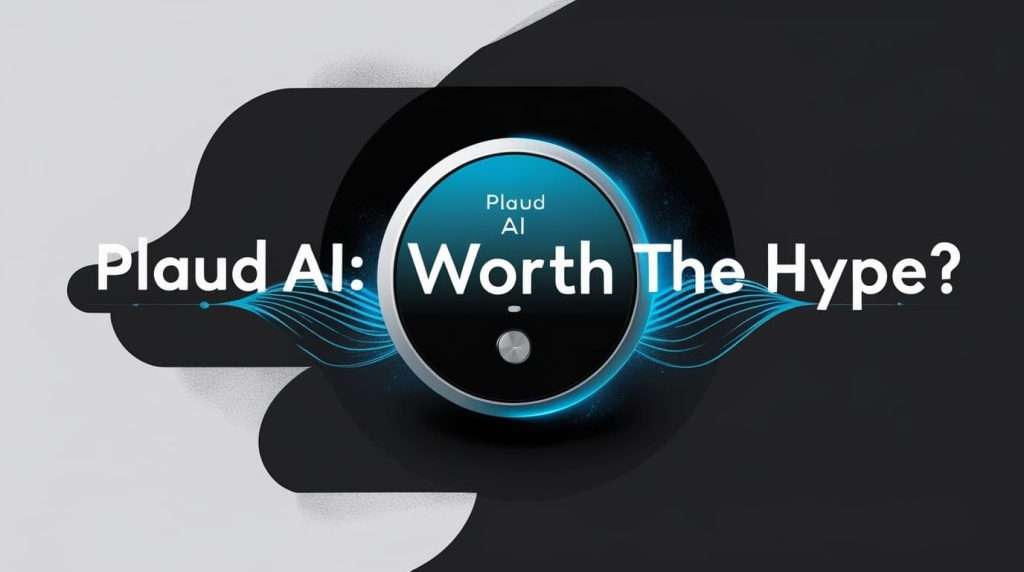
At its core, Plaud Note is a palm-sized AI voice recorder designed to eliminate the need for manual note-taking. It’s a two-part system: a sleek, physical recording device that you can attach to your phone or just place on a desk, and a powerful mobile app where all the AI magic happens.
You use the physical button on the device to start and stop recordings. Once you’re done, the audio file syncs via Bluetooth to the Plaud app on your phone. From there, the AI gets to work, providing you with:
- A full, time-stamped transcription of the entire recording.
- A concise, intelligent summary of the key points discussed.
- Structured formats like meeting notes, mind maps, to-do lists, and even diaries.
It’s built to capture audio in two main ways. A standard mode uses two high-end microphones to pick up ambient sound in a room, like a lecture or a team meeting. But the really clever part is its “VCS” (Vibration Conduction Sensor) mode. When you snap the device onto the back of your iPhone (it’s MagSafe compatible), it uses the phone’s vibrations to capture crystal-clear audio from both sides of a phone call without recording any background noise. Pretty slick, right?

Who Is This Thing Actually For?
Honestly, I can see a few different groups of people falling in love with this gadget. It’s not just for corporate meeting-hoppers, though they are definitely a prime audience.
- Busy Professionals & Managers: This is the most obvious one. If your calendar is a colorful mosaic of back-to-back meetings, Plaud is a game-changer. It frees you up to actually engage in the conversation instead of frantically trying to type or write everything down. You can be fully present, knowing the details are being captured.
- Students & Researchers: Imagine sitting in a two-hour lecture and not having to write a single word. You could record the entire thing, get a full transcript, and then ask the AI to summarize the core concepts for you. For researchers conducting interviews, it’s a dream. It handles the tedious transcription work, letting you focus on the analysis.
- Content Creators & Journalists: As a writer, I often interview people for articles. The old process was a nightmare: record the call, send it to a transcription service (which costs money and takes time), and then sift through pages of text. Plaud automates that entire workflow. For podcasters or YouTubers, it’s an easy way to generate show notes or video descriptions.
- Anyone Who Just Wants to Remember Things: Ever had a brilliant idea pop into your head while driving, only for it to vanish by the time you could write it down? With Plaud, you can just tap a button, record a voice memo, and get a neat, transcribed note waiting for you later. It’s also surprisingly useful for personal things, like documenting conversations with doctors or contractors.

How Does Plaud AI Actually Work? The Tech Breakdown
Okay, let’s peek under the hood for a second. This isn’t just a simple voice recorder with some fancy software tacked on. The real innovation is how the hardware and software work together.
- The Recording: The device itself is all about capturing high-quality audio. The dual-mic setup is great for in-person conversations. But the Vibration Conduction Sensor (VCS) is the secret sauce for phone calls. It captures the vibrations your phone produces when someone speaks, directly recording their voice without picking up your dog barking in the background. It’s a much more elegant solution than those awkward speakerphone recordings.
- The Sync: Once you stop recording, the device uses Bluetooth 5.2 to send the audio file over to the Plaud app. I found this to be pretty quick and painless.
- The Transcription: This is where the AI first flexes its muscles. The app sends the audio to Plaud’s servers, where it’s processed by an AI transcription engine. In my tests, the accuracy was seriously impressive, even with multiple speakers and some light background noise. It’s not 100% perfect—no transcription service is—but it gets darn close, and it handles different accents better than a lot of other tools I’ve tried.
- The Summarization (The GPT Magic): After transcription, the text is fed into a sophisticated language model, which is a fine-tuned version of OpenAI’s GPT. This is what generates the summaries. Instead of just pulling out random sentences, it understands the context of the conversation and structures the output in a genuinely useful way.
You get a choice of output formats, which is a brilliant touch:
- Meeting Note: This gives you a professional, structured summary with a title, key takeaways, and a list of action items.
- Mind Map: For visual thinkers, this organizes the core ideas and sub-points into a branching diagram.
- Diary: A more narrative, first-person summary of the events.
- Class Note: Tailored for lectures, focusing on key concepts and definitions.

My Personal Experience: The Good, The Bad, and The “Huh.”
I put the Plaud Note through its paces for a couple of weeks, using it for everything from team meetings and client calls to brainstorming sessions and random voice memos. Here’s my brutally honest take.
The Good: What I Absolutely Loved
- The “Set It and Forget It” Factor: The biggest win for me was the mental freedom. Just placing the little disc on the table and knowing everything was being captured was liberating. I felt more engaged, made better eye contact, and contributed more thoughtfully to conversations because I wasn’t distracted by note-taking.
- Surprisingly High Accuracy: I was skeptical about the transcription quality, especially for phone calls. But the VCS sensor is legit. It captured both sides of my calls clearly, and the AI did a fantastic job of separating the speakers. It’s not perfect with very heavy accents or a lot of crosstalk, but for most standard business conversations, it’s more than reliable.
- The Summaries Are Genuinely Useful: This was my other big surprise. I expected generic, clunky summaries. Instead, the AI-generated meeting notes were sharp, well-organized, and did an excellent job of pulling out the actual important points and action items. The mind map feature is also a fantastic way to get a quick visual overview of a complex discussion.
- Sleek and Unobtrusive Design: The device itself is small, light, and looks professional. It doesn’t feel like you’re plonking a clunky piece of spy gear on the conference table. The MagSafe compatibility is also a huge plus for iPhone users.
The Bad: What Could Be Better
- The Subscription Model: Ah, yes, the inevitable subscription. While you get a certain amount of transcription/summarization credits with the device purchase, heavy users will need to subscribe to their “AI Membership.” This unlocks the full power of the AI summaries and gives you more processing time per month. While the pricing isn’t outrageous, it’s still an ongoing cost to factor in. It’s a classic case of “the razor is cheap, but the blades will get you.”
- No Live Transcription: This is a feature I found myself wishing for. The processing happens after the recording is finished and synced. So you can’t see the transcript appear in real-time. For most of my use cases, this wasn’t a deal-breaker, but if you need instant notes, this isn’t the tool for that.
- Dependence on the App: The device itself is essentially just a high-quality microphone and storage unit. All the intelligence lives in the cloud, accessed via the app. So, no phone, no app, no magic.
The “Huh.”: A Few Quirks
- One-Button Simplicity is a Double-Edged Sword: The device has a single button for starting/stopping recordings and a switch to toggle between standard and VCS mode. It’s minimalist and elegant, but I did accidentally stop a recording once when I meant to just check on it. There’s a slight learning curve to the button presses and LED indicator lights.
Plaud AI vs. The Competition: How Does It Stack Up?
So, how does Plaud compare to just using an app on your phone, like Otter.ai?
The key differentiator is the dedicated hardware. Phone apps are great, but they rely on your phone’s built-in microphone, which can be hit-or-miss. They struggle in noisy rooms and are often terrible at recording phone calls unless you use cumbersome workarounds.
Plaud’s dedicated hardware, especially the VCS sensor, is designed for one job: capturing perfect audio. This better input quality leads to better output (better transcripts and summaries).
Plaud Note vs. Otter.ai & Other Apps:
| Feature | Plaud AI Note | Phone Apps (e.g., Otter.ai) |
| Call Recording | Excellent (via VCS Sensor) | Clunky / Requires workarounds |
| In-Person Recording | Very Good (Dual Mics) | Good (Relies on phone mic) |
| Portability | Excellent (Tiny device) | Good (It’s your phone) |
| AI Summaries | Excellent (GPT-powered) | Good to Very Good |
| Ease of Use | Simple one-touch hardware | Requires opening app, etc. |
| Cost | Upfront hardware + optional subscription | Freemium / Subscription model |
IMO, if you only need to occasionally record an in-person meeting in a quiet room, a phone app might be enough. But if you’re a heavy user, frequently record phone calls, or demand the highest quality and convenience, the dedicated hardware of the Plaud Note offers a significant advantage.

The Final Verdict: Is Plaud AI Worth Your Money?
After a few weeks of living the no-manual-notes life, I’m a convert. Plaud AI Note isn’t just a gadget; it’s a productivity system. It genuinely solves the problem it sets out to fix. It saves time, reduces mental clutter, and helps ensure that crucial details from conversations are never lost.
Yes, there’s an upfront cost for the device and a potential subscription fee, so it’s an investment. But what’s the cost of a missed action item or a forgotten client requirement? For many professionals, this device could pay for itself very quickly.
So, here’s my final recommendation:
If you are a professional, student, or creator whose work relies heavily on meetings, interviews, or lectures, I think the Plaud AI Note is absolutely worth it. It’s one of the best examples I’ve seen of hardware and AI coming together to create a seamless, genuinely useful experience. You’re not just buying a recorder; you’re buying back your focus.
However, if your need for recording and transcription is only occasional and you don’t mind the lower quality of phone-based recordings, then a free app might be a more sensible starting point.
For me? I think my collection of sad, empty notebooks can finally rest in peace. 🙂 This little AI-powered disc has earned a permanent spot in my everyday carry.

 Login with Google