
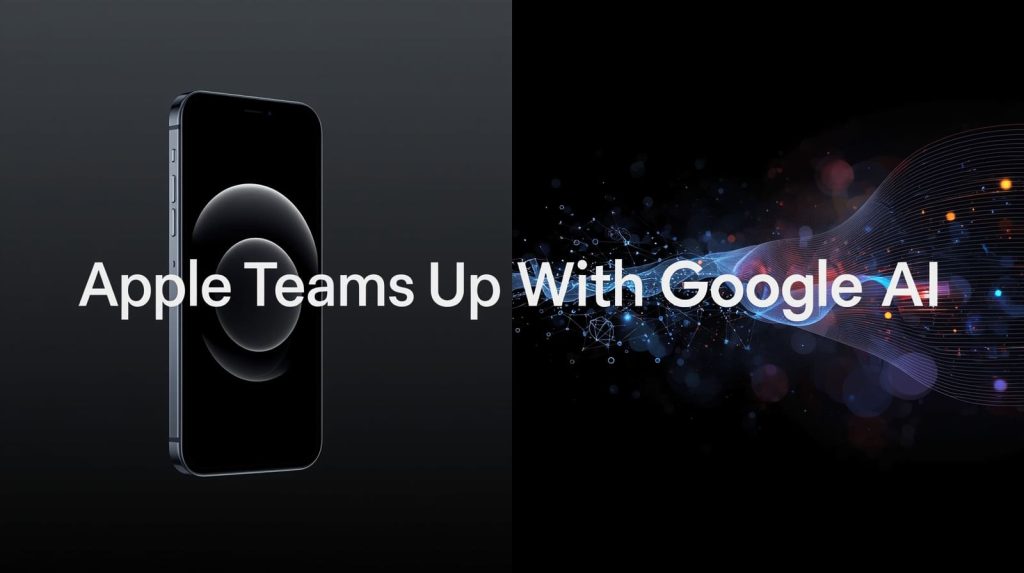
Cupertino meets Mountain View — and this time, it’s about survival, speed, and who controls the future of artificial intelligence.
In a move that surprised some and quietly shocked others, Apple has decided to lean on its longtime rival Google to fix one of its biggest modern problems: Siri.
Yes, that Siri. The voice assistant that once felt magical in 2011, but in recent years became the tech world’s favorite punching bag.
On January 11, 2026, Apple and Google confirmed what had been rumored for months — a multi-year partnership that will bring Google’s Gemini AI models deep into Apple’s ecosystem, powering a revamped Siri and future Apple Intelligence features set to roll out in late 2026.
It’s a big deal. A very big deal.
This is not just about making Siri a little smarter. This is Apple admitting, quietly but clearly, that the AI race has moved too fast to win alone.
Why Apple Needed This Deal — and Why Now
Let’s be honest. Apple has been late to the AI party.
While OpenAI’s ChatGPT went viral, Microsoft wrapped AI into Windows, and Google pushed Gemini across Search and Android, Apple was… careful. Very careful. Too careful, some would say.
At WWDC 2024, Apple teased a bold vision for “Apple Intelligence.” The demos looked promising. But behind the scenes, things moved slower than expected. Internal AI models struggled to match competitors on scale, speed, and context awareness.
Meanwhile, iPhone sales flattened in key markets. Consumers started asking uncomfortable questions:
- Why does Siri still miss basic commands?
- Why does it not understand context like ChatGPT?
- Why does Apple feel behind?
Pressure was building. Investors noticed. Wall Street noticed.
Apple needed a shortcut — without losing control.
That’s where Google came in.
Why Google’s Gemini Won the Race
According to people familiar with the discussions, Apple evaluated multiple AI providers, including OpenAI and Anthropic. But in the end, Google’s Gemini models stood out.
Why?
Three main reasons:
- Scale and Power
Gemini’s largest models reportedly reach over 1.2 trillion parameters, giving them a strong edge in reasoning, context memory, and multi-step tasks. - Personalization at System Level
Apple wanted AI that could live deep inside the operating system — not just answer questions, but understand apps, habits, and user intent. Gemini fit that vision better. - Infrastructure Ready Today
Google’s cloud and AI infrastructure is already battle-tested at global scale. Apple didn’t want to wait years to catch up.
So Apple made a call that would have felt unthinkable a decade ago.
It picked Google.
What Changes for Siri (And Why This Time Feels Different)
Apple says the new Siri, powered by Gemini, will be dramatically different.
This is not just a facelift. It’s a full brain transplant.
Here’s what’s expected when the upgraded Siri launches in late 2026:
- Better understanding of context
Siri will remember what you asked five minutes ago and connect it to what you ask next. - Smarter personalization
It will learn how you speak, what apps you use, and how you like things done. - Deeper app control
Siri won’t just open apps — it will operate inside them. - More natural conversations
Less robotic. More human. (At least, that’s the goal.)
And here’s the scale that makes this deal massive:
Apple has over two billion active devices worldwide.
If this works, Gemini won’t just be powering phones — it will be quietly running one of the largest AI deployments in history.
Privacy: Apple’s Non-Negotiable Line
Now, this is where Apple drew a hard boundary.
Despite using Google’s models, Apple insists Google will not see user data.

All AI processing will happen either:
- On-device, or
- Inside Apple’s Private Cloud Compute, a secure environment designed so even Apple can’t see individual user data.
Google’s Gemini models provide the intelligence — but not the access.
Apple executives were clear: this partnership does not change Apple’s privacy-first stance.
Whether users believe that is another story. But Apple knows its reputation depends on it.
The Money Behind the Handshake
Officially, Apple and Google are staying quiet about the financial details.
Unofficially? The numbers are huge.
Reports suggest Apple may pay around $1 billion per year to license Gemini technology — making this one of the largest AI deals ever signed.
If true, it signals just how serious Apple is about fixing Siri and accelerating its AI roadmap.
It also explains why Wall Street reacted positively.
Market Reaction: Wall Street Likes the Honesty
Investors didn’t punish Apple for partnering with Google.
They rewarded it.
Analysts called the move “pragmatic,” “necessary,” and “long overdue.”
The thinking is simple:
- Apple tried to build everything alone.
- It fell behind.
- Now it’s choosing speed over pride.
For Alphabet, this is a massive win. Gemini already powers Samsung’s Galaxy AI, but integrating with Siri unlocks Apple’s premium user base — a very different crowd.
Some analysts even expect this deal to help push Alphabet’s stock higher, especially after it joined Nvidia, Microsoft, and Apple in crossing a $4 trillion valuation.
What Happens to ChatGPT on Apple Devices?
Good question.
ChatGPT isn’t going away.
Apple confirmed that ChatGPT will remain an opt-in option, just like earlier integrations. But Gemini will become the core intelligence layer for Siri and Apple Intelligence at the operating system level.
Think of it like this:
- ChatGPT is a powerful tool you can choose.
- Gemini is the engine running under the hood.
This strategy allows Apple to stay flexible while anchoring its future to one main AI foundation.
A Partnership Years in the Making
Rumors of this deal first surfaced in late 2025, with Bloomberg reporting Apple’s interest in Gemini’s largest models.
At the time, many dismissed it as speculation.
Now it’s official.
And it says something important about the current tech landscape:
No company — not even Apple — can do everything alone anymore.
The Bigger Picture: Rivals Today, Partners Tomorrow
Apple and Google have always had a strange relationship.
They compete fiercely.
They sue each other.
And yet, Google pays Apple billions to stay the default search engine on iPhones.
This AI partnership is another chapter in that complicated story.
It shows how artificial intelligence is reshaping alliances across Silicon Valley. Old rivalries matter less when the stakes are this high.
Final Thought: A Risk Apple Had to Take
This deal could change everything — or backfire.
If the new Siri finally lives up to expectations, Apple wins back trust, relevance, and momentum.
If it doesn’t? Critics will say Apple sold its soul and still fell behind.
But one thing is clear tonight:
Apple is done waiting.
The AI race is moving too fast. And with Gemini now inside Siri, Apple is sprinting again — even if it means running alongside its oldest rival.
The next two years will tell us if this bold bet pays off.
One thing’s for sure — the tech world will be watching.


 Login with Google