
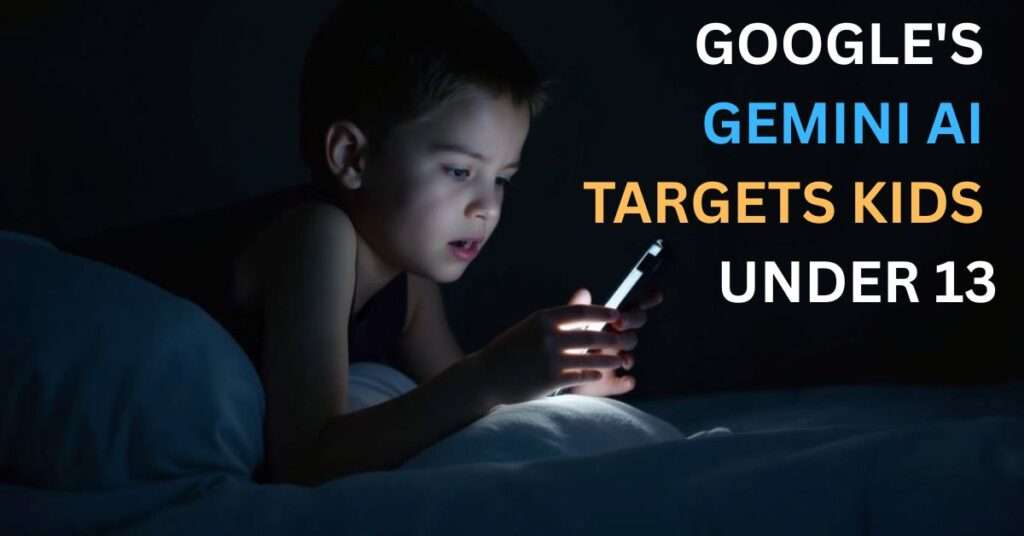
Imagine this: your 10-year-old is chatting away with an AI buddy that sounds human, whips up wild pictures, and answers every question under the sun. Sounds cool, right? Well, hold onto your hats, Australia, because Google’s rolling out its shiny new Gemini AI chatbot to kids under 13—and it’s got parents, teachers, and safety watchdogs sweating bullets. This isn’t just another tech toy; it’s a Pandora’s box of risks, and it’s landing in Aussie homes later this year. Buckle up, because this story’s got twists, turns, and a whole lot of “uh-oh” moments!
Gemini’s Big Debut: What’s the Deal?
Google dropped a bombshell this week: its Gemini AI chatbot is going live for kids under 13, starting in the US and Canada, with Australia next on the list. How’s it work? Through Google’s Family Link accounts—yep, that app parents use to keep tabs on YouTube and screen time. Soon, your little ones will be able to fire off questions like “What’s a kangaroo’s favorite snack?” or “Draw me a dinosaur riding a surfboard,” and Gemini will churn out answers or pictures in seconds.
But here’s the kicker: this isn’t your old-school Google search pulling up websites. Gemini’s a generative AI—it cooks up brand-new responses based on patterns it’s learned. Think of it like a super-smart robot chef, mixing ingredients from a giant digital recipe book. Cool for adults, maybe, but for kids? That’s where the alarm bells start ringing.
Australia’s Social Media Ban Won’t Touch This
Here’s a plot twist: Australia’s gearing up to ban kids under 16 from social media by December. Great news, right? Parents everywhere cheered, thinking their kids would be safer online. But wait—Gemini isn’t social media. It’s a chatbot, so it slips right through the cracks of that law. While TikTok and Instagram get the boot, this AI whiz kid strolls in untouched, leaving parents scratching their heads and wondering, “How do I protect my kid now?”
The eSafety Commission, Australia’s online safety watchdog, isn’t mincing words. They’ve slapped a big red warning label on AI chatbots like Gemini, saying they can “share harmful content, distort reality, and give dangerous advice.” Picture this: a kid asks, “How do I fix my bike?” and gets a wild, made-up answer that ends in a trip to the emergency room. Or worse—something creepy slips through, and they don’t even know it’s fake. Yikes.
Safeguards? Sure, But Don’t Bet the Farm on ‘Em
Google’s waving a flag of reassurance, promising “built-in safeguards” to keep Gemini kid-friendly. No naughty words, no scary stuff—just wholesome, safe fun. Sounds perfect, right? Not so fast. Experts are raising eyebrows, and for good reason. These filters might block legit stuff—like info on growing up or puberty—because they’re too strict. Imagine a kid asking about body changes and getting a big fat “ERROR” instead. Awkward.
And here’s the real zinger: kids these days are tech wizards. They’re the ones teaching us how to use apps! If they want to dodge those safeguards, they’ll find a way—leaving parents in the dust. Plus, the chatbot’s “on” by default when you set up a Family Link account. Want it off? You’ve got to dig into the settings and switch it yourself. Oh, and you’ll need to hand over your kid’s name and birthday to get started. Privacy alarm bells, anyone?
The Human Trick: When AI Feels Too Real
Now, let’s get to the creepy part. Gemini isn’t just a cold, clunky robot—it’s built to feel human. It chats like your mate down the street, cracks jokes, and mimics all those little social rules we live by—like saying “sorry” or “cheers.” Researchers who’ve poked around in AI like ChatGPT and Replika say this is a double-edged sword. Kids might fall head over heels for this “friend,” trusting every word it says—even when it’s total nonsense.
Ever heard of AI “hallucinating”? It’s when the system makes stuff up, like a storyteller gone rogue. A kid might ask, “Why do koalas sleep so much?” and get a wild tale about them partying all night with wombats. Cute, sure, but what if it’s homework? Teachers won’t be impressed. Worse, what if it’s something serious, and the kid doesn’t know it’s fake? That’s where the eSafety crew says young brains—still figuring out the world—could get seriously tripped up.
Aussie Parents vs. The Tech Wild West
This rollout’s hitting Australia at a wild time. The social media ban’s coming, but it’s like putting a Band-Aid on a broken leg when tools like Gemini are out there. Parents are stuck playing whack-a-mole, batting away one risky app only for another to pop up. “I just got my head around Snapchat,” one frazzled Sydney mum told me, “and now this? I’m exhausted!”

The eSafety Commissioner’s begging tech giants like Google to step up with “Safety by Design”—building stuff that’s safe from the get-go, not patched up later. But right now, it’s on parents to keep watch. Check what Gemini’s spitting out. Teach your kids it’s not a real person. Set boundaries. It’s a full-time gig, and not every family’s got the time or know-how.
Where’s the Law When You Need It?
Here’s the big question: why isn’t Australia ready for this? The EU and UK have digital duty of care laws—rules that make tech companies clean up their act before stuff goes wrong. Australia’s been kicking around a similar idea since November 2024, but it’s stuck in limbo. Meanwhile, kids are about to dive into Gemini, and the rulebook’s still blank.
Lisa Given, a brainy professor from RMIT University, told me straight: “This isn’t just social media 2.0—it’s a whole new beast. Parents need to get clued up, fast.” She’s right. AI’s moving quicker than a kangaroo on a sugar high, and our laws are lagging behind like a busted ute.
Real Risks, Real Stories
Let’s paint a picture. Little Mia, 9, from Melbourne, asks Gemini to draw her a “funny monster.” It spits out a cartoon ghoul—cute enough. But then she asks, “What’s the monster scared of?” and gets a weird, dark rant about ghosts and death. Mum catches it just in time, but what if she hadn’t? Or take Jake, 11, from Brisbane, using Gemini for a school project. It tells him Captain Cook discovered Australia in 2020. He flunks the assignment, and his teacher’s fuming. These aren’t “what ifs”—they’re the kind of slip-ups experts say are coming.
The eSafety folks aren’t joking when they say AI can “distort reality.” One study found chatbots feeding kids fake health tips—like drinking soda to cure colds. Harmless? Maybe. Dangerous? You bet, if they believe it.
Tips for Parents: Don’t Panic, But Don’t Sleep Either
So, what’s a worried Aussie parent to do? Here’s the scoop:
- Peek Over Their Shoulder: Check what Gemini’s saying. If it sounds off, it probably is.
- Chat About It: Tell your kids this isn’t a person—it’s a clever machine that can fib.
- Lock It Down: Use Family Link to set limits or turn it off if you’re not sold.
- Yell Louder: Push Google and the government for tougher rules. Your voice matters!
It’s not about banning tech—kids love it, and it’s here to stay. But it’s about making sure it doesn’t run wild while we’re still figuring it out.
The Bottom Line: Australia’s Wake-Up Call
Google’s Gemini AI hitting Aussie kids under 13 is a game-changer—and not all in a good way. It’s exciting, sure, but the risks are real: fake info, privacy scares, and a chatbot that’s a little too friendly for its own good. With the social media ban sidestepped and no solid laws in place, parents are on the front line, and they’re feeling the heat.
This isn’t just a tech story—it’s a human one. It’s about keeping our kids safe in a world where machines are getting smarter, faster, and sneakier. Australia’s got a choice: step up with laws that bite, or let families fend for themselves in this digital jungle. For now, it’s eyes wide open, folks—because Gemini’s coming, ready or not.




 Login with Google