
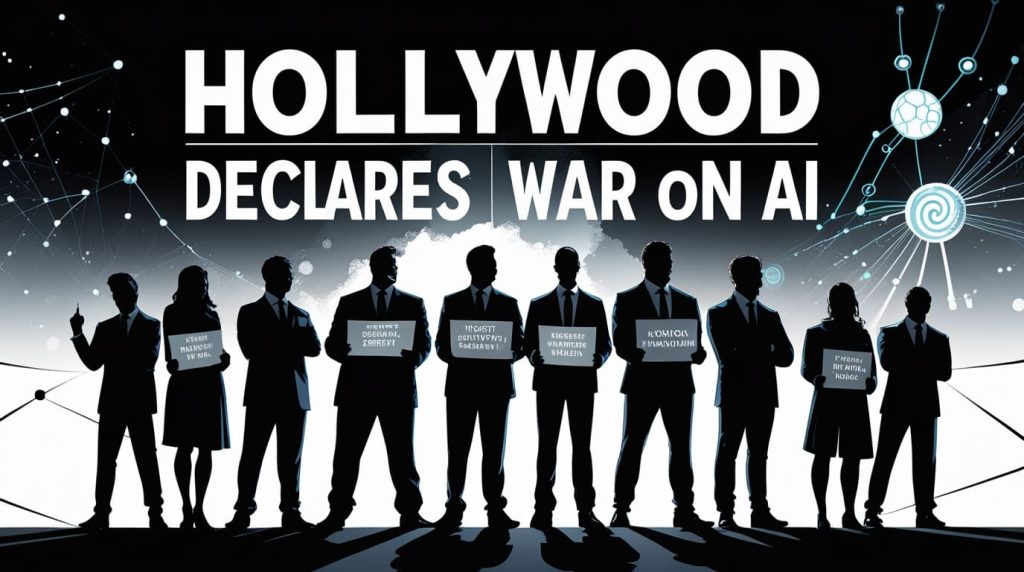
Hollywood is angry. And this time, it’s not about bad box office numbers or award snubs. It’s about artificial intelligence.
More than 800 actors, filmmakers, musicians, writers, and artists across the United States have come together to back a loud and emotional anti-AI campaign. Their message is simple, but sharp: using human-created work to train AI without permission is theft. And they want it to stop.
The campaign, called “Stealing Isn’t Innovation,” has quickly caught attention in film studios, music labels, publishing houses, and even inside Washington. Big names are attached. Big emotions are involved. And the fight over who owns creativity in the age of AI is now very public.
“This Is Our Work, Our Lives”
The initiative was launched by the Human Artistry Campaign, a coalition that represents creators, unions, and industry groups across entertainment. It officially went public around January 22, 2026, but the frustration behind it has been building for years.
Supporters say large technology companies are training powerful AI systems on movies, TV shows, songs, photographs, books, and scripts without asking permission and without paying the people who made them.
To many in Hollywood, this feels like a line has been crossed.
One filmmaker involved in the campaign said, “This is not some future problem. It’s happening right now. Our work is being taken, copied, and reused by machines that could replace us.”
That fear runs deep. Actors worry about digital replicas of their faces and voices. Writers fear AI-generated scripts flooding the market. Musicians see songs made in their style, but without their name or paycheck.
Big Names, Big Signal
The list of supporters reads like a red carpet guest list.
Actors such as Scarlett Johansson, Cate Blanchett, and Joseph Gordon-Levitt have signed on. Musicians including Questlove and members of R.E.M. are also backing the campaign. Well-known authors like Jonathan Franzen have added their names too.
This is not just one corner of Hollywood complaining. The coalition stretches across film, television, music, photography, and literature. By late January, reports showed between 700 and 800 creatives had signed the statement, and the number continues to grow quietly.
Industry insiders say the goal is not to kill AI. Many of these same artists use technology every day. The issue, they say, is how AI is being built.
“Innovation Should Not Mean Exploitation”
At the heart of the campaign is one strong idea: innovation should not come at the cost of creators’ rights.
The statement argues that training AI models on copyrighted work without consent is not fair use. It is not collaboration. It is exploitation.
Campaign organizers say tech companies often hide behind words like “progress” and “innovation,” while ignoring the human cost. Behind every movie scene, song lyric, or novel paragraph is a person who spent years learning their craft.
“If a company wants to use our work, fine,” one music producer involved said. “But ask us. License it. Pay for it. Don’t just scrape it off the internet and call it progress.”

The campaign pushes for ethical licensing, meaning AI developers should only use creative content when they have clear permission and offer fair compensation.
Jobs on the Line
This is not just a moral argument. It’s an economic one.
Actors and filmmakers warn that unchecked AI could wipe out thousands of jobs across entertainment. Background actors already report losing work to AI-generated crowds. Voice artists say clients are asking for AI voices instead of real people. Some writers fear studios may soon ask AI to “fix” scripts instead of hiring humans.
A union representative said quietly, “We fought for decades to protect creative labor. AI threatens to undo that in five years.”
The campaign also points to a wider ripple effect. If creative jobs disappear, entire support industries suffer too. Editors, sound engineers, costume designers, and assistants all feel the pressure.
Pressure on Lawmakers Grows
The timing of the campaign is no accident.
Pressure is building on US lawmakers to step in and create clear rules around AI and copyright. Right now, the legal landscape is messy. Courts are still debating whether AI training counts as fair use. Laws written decades ago never imagined machines that could write scripts or sing songs.
This campaign adds fuel to that debate.
By going public, Hollywood creatives hope to push politicians to act faster. They want laws that clearly state how AI can be developed, what content it can use, and how creators should be protected.
Some supporters point to earlier efforts. In 2025, several creative groups sent letters to the Trump administration asking for stronger copyright protections in the age of AI. Those letters sparked discussion but little action.
This time, the tone is sharper. The language is stronger. And the message is harder to ignore.
Tech Companies Stay Quiet
So far, major technology companies have not directly responded to the campaign.
In past statements, many AI developers have argued that training on large datasets is essential to building useful systems. Some say they follow existing copyright law. Others promise future tools that allow creators to opt out.
But for many artists, those promises feel late and vague.
A screenwriter who signed the statement said, “We’re always told, ‘Don’t worry, we’ll fix it later.’ But later never comes. By the time it does, the damage is already done.”
Industry analysts say tech firms are watching closely. Hollywood has influence, money, and public sympathy. If this movement grows, it could change how AI companies operate.
Not Anti-Tech, But Pro-Human
One thing campaign organizers repeat again and again: this is not an anti-technology movement.
Many supporters openly admit that AI can be useful. It can help with editing, special effects, translation, and accessibility. The problem is control.
They want a future where AI works with artists, not instead of them. A future where creativity is respected, not mined like free data.
As one actor put it, “We are not against machines. We are against being erased by them.”
A Fight That’s Just Beginning
As of January 25, 2026, there have been no major follow-up announcements or policy changes tied directly to the campaign. Media coverage peaked in the days after launch, with ads, social posts, and stories in major outlets.
But make no mistake, this story is far from over.
Behind closed doors, studios, unions, tech companies, and lawmakers are all talking. Quietly. Carefully. Everyone knows the stakes are high.
Hollywood has declared its position. Loudly. Publicly. And emotionally.
Whether Washington listens, and whether Silicon Valley changes course, will decide what creativity looks like in the next decade.
For now, one message from Hollywood is echoing across the industry:
Stealing isn’t innovation. And artists are done staying quiet.
 Login with Google